March is one of the most important months for the olive grove.
You can’t see the fruit yet, there’s no talk of harvest, and there’s no scent of oil in the air.
And yet, this is when much of the future production is decided.
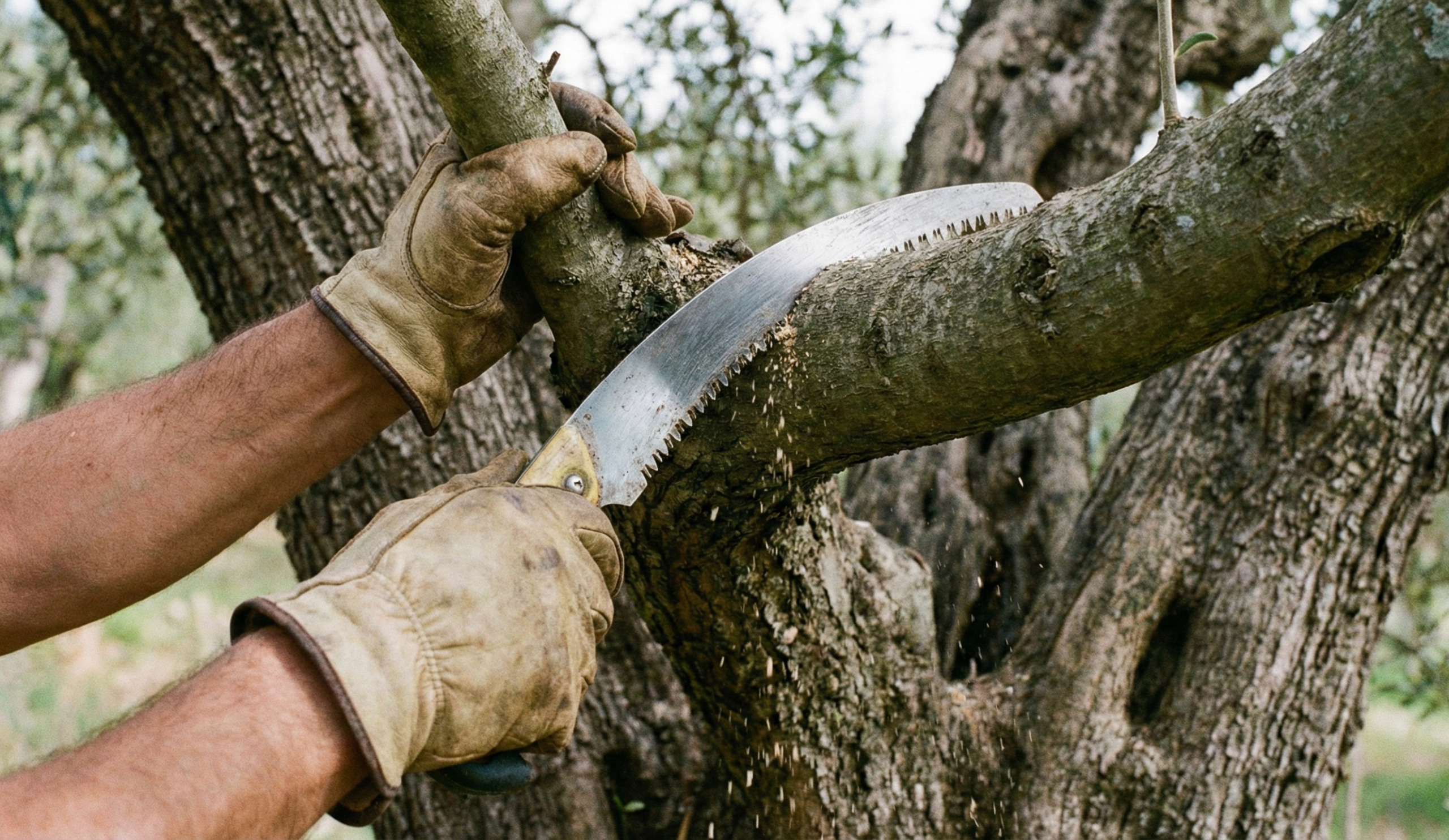
Pruning the olive tree is a delicate and strategic phase. It helps balance the plant, allows light and air to pass through the branches, and prepares it for the new season’s yield.
Every cut is a choice that looks ahead.
Why Olive Trees Are Pruned in Spring
The olive tree is a generous plant, but it naturally tends to produce a lot of wood.
If left unmanaged, it develops a dense canopy that:
-
reduces the passage of light
-
limits air circulation
-
encourages disease
-
lowers the quality of the olives
Pruning is used to restore balance.
In Tuscany, the ideal window is between late winter and early spring, when the risk of severe frost has passed but the tree has not yet entered full vegetative growth.
March is often the perfect time.
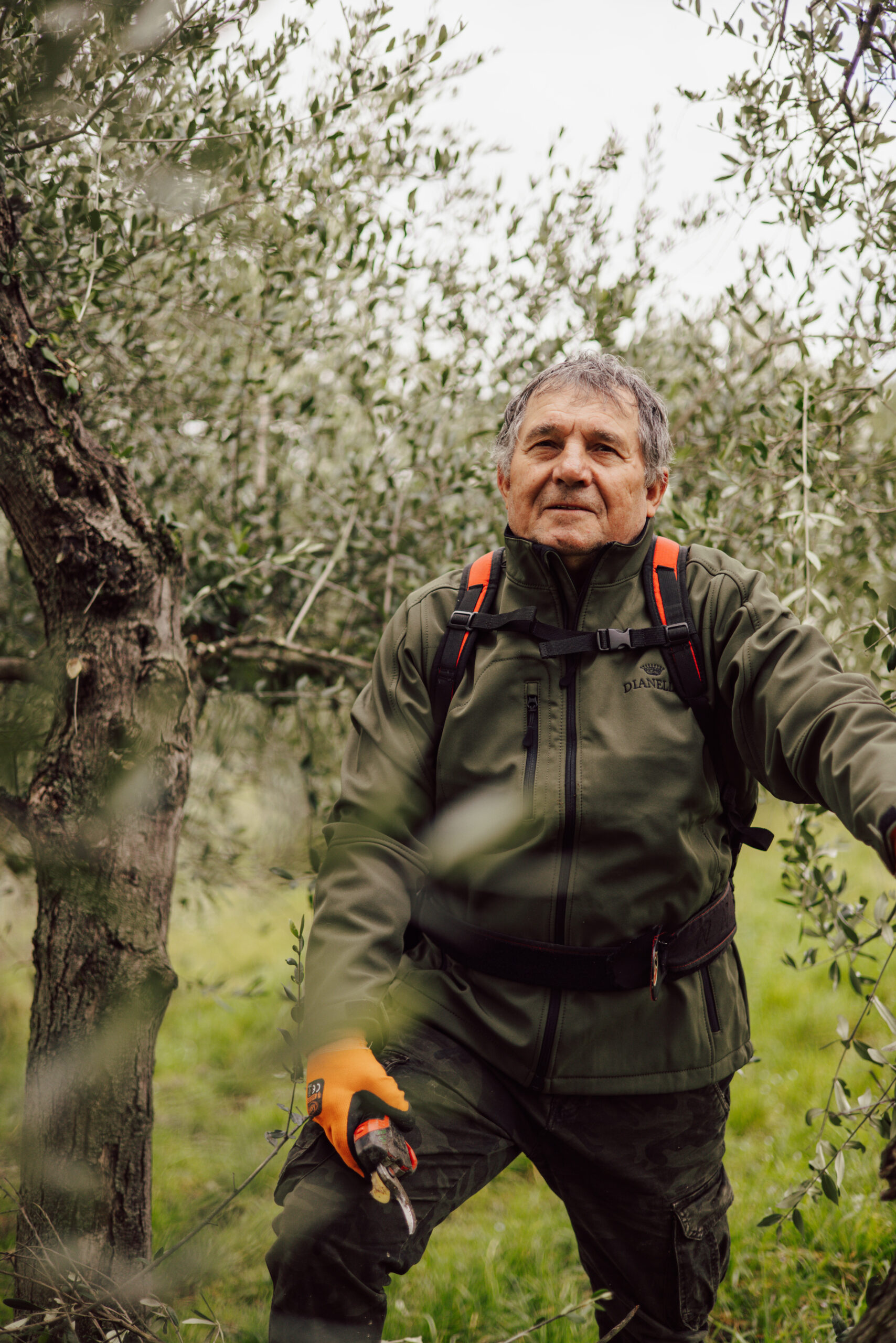
The Goal: Balance Between Growth and Production
Pruning doesn’t mean “cutting a lot.”
It means cutting well.
An olive tree that is too full of branches will produce fewer quality fruits.
A tree that is over-pruned will react with excessive vegetative growth the following year.
The goal is to find the right balance between:
-
fruiting wood
-
new growth
-
a stable structure
-
proper light exposure
Olive trees bear fruit on the previous year’s branches. This is the key principle.
If the tree is misread, the production is compromised.
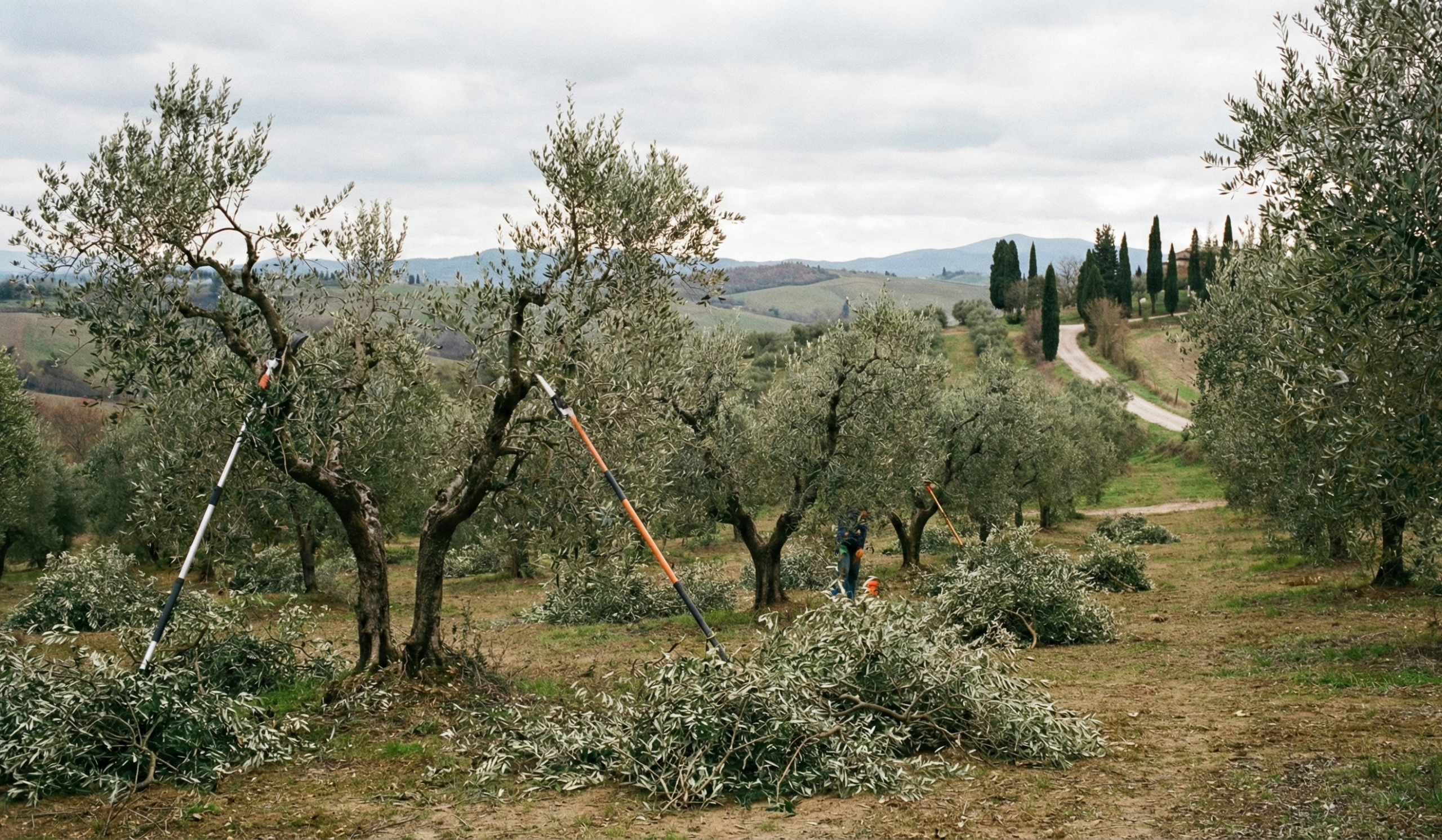
The Training System: the Polyconic Vase
In traditional Tuscan olive groves, the most effective training system remains the polyconic vase.
It’s not an aesthetic choice, but an agronomic one.
The structure includes:
- 3 or 4 main branches
- angled outward
- an open center
- controlled vertical growth
The shape resembles an inverted cone, but it is not an “upside-down tree.”
It’s a system that allows light to enter evenly and air to circulate through the branches.
This reduces:
- internal humidity
- the risk of fungal diseases
- excessive, unproductive growth
It also makes both manual and mechanical harvesting easier.
The polyconic vase helps distribute the productive load more evenly, supporting the management of the olive tree’s natural alternate bearing.
In practical terms: fewer imbalances between years, more consistency in quality.
Pruning and Oil Quality: a Direct Link
Proper pruning has a direct impact on the quality of extra virgin olive oil.
Why?
An open canopy reduces humidity and fungal diseases.
More light leads to better fruit ripening.
A balanced crop load avoids small, low-quality olives.
Those who think oil quality is determined only at the mill are mistaken.
It starts here. With a saw in hand.
A Tree-by-Tree Approach
Pruning is not a mechanical task.
It is done tree by tree.
You observe the natural shape of the olive tree, its age, its vigor, and the previous season.
Every tree has a different story.
A tree that produced heavily last year needs to be lightened.
A tree that struggled needs support to recover.
There is no standard cut.
March 2025: Conditions and Challenges
After an irregular winter with temperature fluctuations, managing the olive grove requires even more attention.
Recent seasons have shown that the climate is no longer predictable:
- cold springs
- sudden heat spikes
- periods of drought
- intense, concentrated rainfall
Pruning becomes a tool for adaptation.
A balanced tree responds better to climatic stress.
What Happens After Pruning
Once the work is finished:
- prunings are shredded
- plant health is checked
- fertilization is planned
- signs of olive fruit fly are monitored later in the season
Pruning is not an isolated intervention.
It is part of continuous, year-round management.
Pruning and Alternate Bearing
Olive trees are subject to “alternate bearing”: one heavy year, one light year.
Smart pruning helps reduce this effect.
It doesn’t eliminate it, but it makes it more manageable.
This means:
- more consistent production
- more stable planning
- more uniform quality
Why Talk About Pruning
People often talk about harvest, about picking, about bottles.
Rarely about what comes before.
The quality of an extra virgin olive oil does not begin in October.
It begins now.
In the quiet of the olive grove.
Among sawdust and freshly cut branches.