When we talk about wine, we often talk about grape varieties, vintages, cellar techniques. We rarely pause to consider what lies beneath the vines’ feet, yet it is precisely there that a fundamental part of a wine’s identity is born.
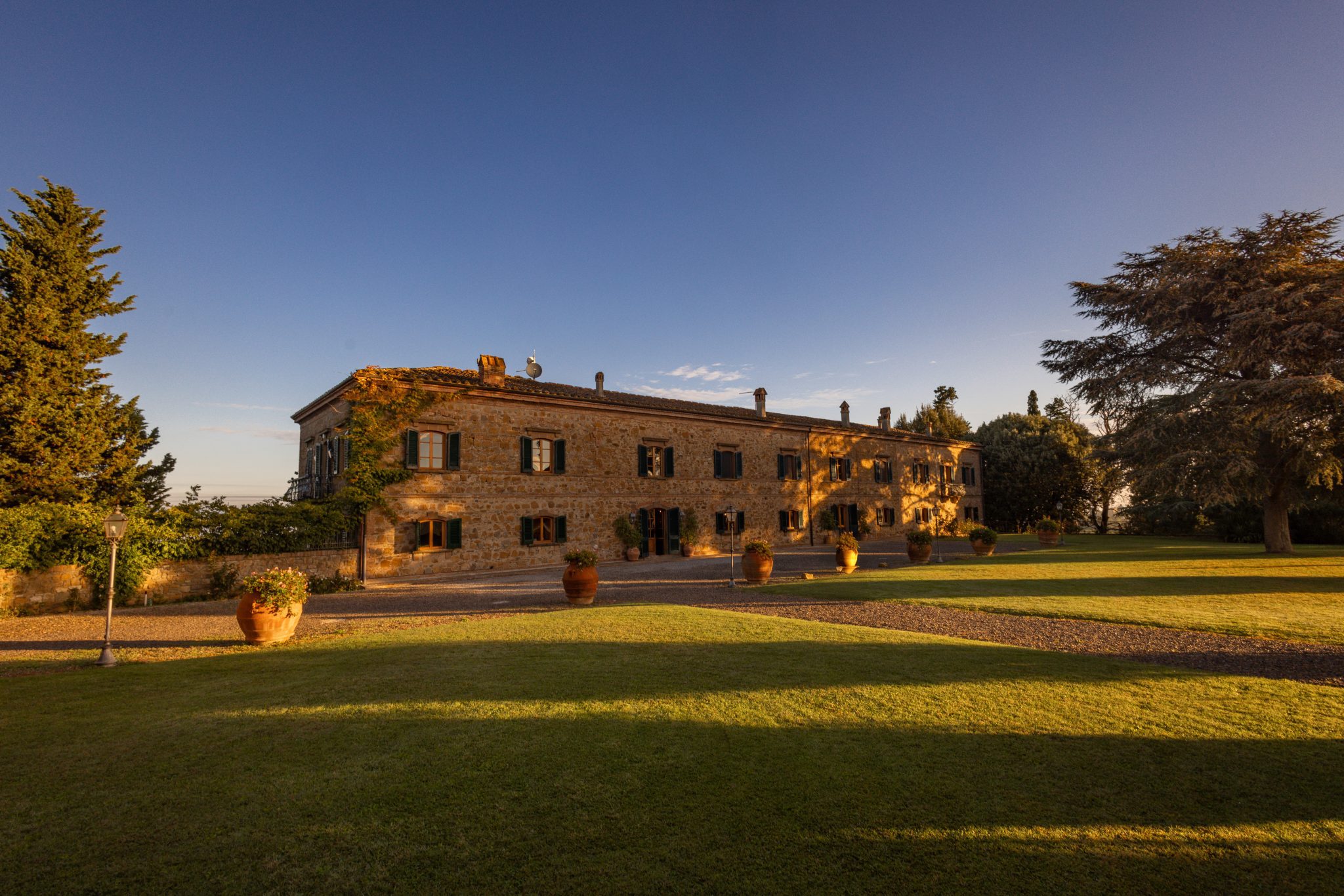
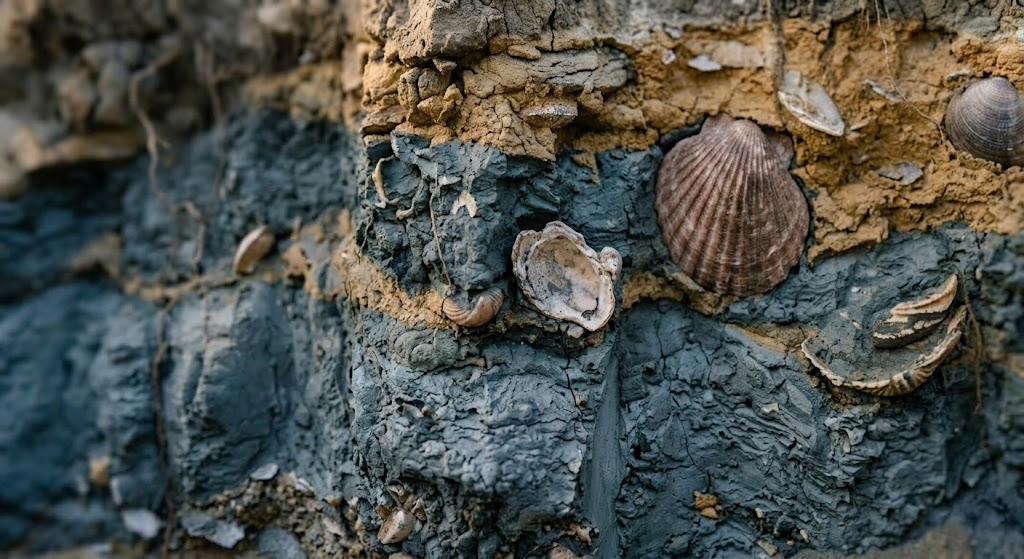
At Villa Dianella, set on the hills between Vinci and Empoli, the soil tells a very ancient story. The geology of the area belongs to a well-defined formation known as the Pliocene Blue Clays, often interlayered with what are called Yellow Sands. These are marine sediments deposited between three and five million years ago, when these hills were still the floor of a shallow sea.
This alternation of clay, sand and fossils is one of the keys to understanding the character of the wines produced here.
Blue Clays: A Soil That Retains Water and Preserves Freshness
The name “Blue Clays” has a curious history. It was Leonardo da Vinci himself who, observing the fossils found in the hills around his birthplace, used this term to describe these marine sediments.
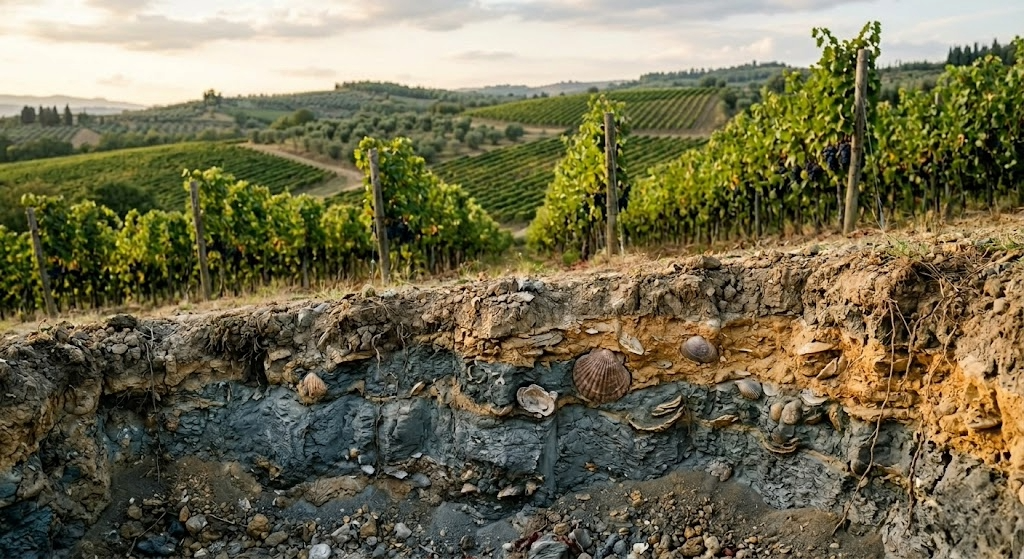
From a geological standpoint, this is a very fine clay, rich in silt and calcium carbonate, formed on the floor of ancient marine basins. When cut or freshly exposed, the earth appears grey-blue, while on the surface it tends to turn more yellowish due to iron oxidation.
From an agronomic perspective, this soil has one fundamental characteristic: it retains water.
This is particularly important in warm vintages. The clay acts as a natural water reserve, allowing the vine to face periods of drought without excessive stress. In the case of Sangiovese, this condition helps preserve acidity and freshness — two essential elements for balance in the wine.
The roots, forced to work their way through compact terrain, push deep into the ground. This process encourages greater mineral complexity and a more solid structure in the wines.
Sandy Clays and Marine Fossils
In the vineyards surrounding the villa, the clay is almost never found in its pure state. It often blends with Pliocene marine sands, producing what geologists call marly clay — a natural mixture of clay and limestone.
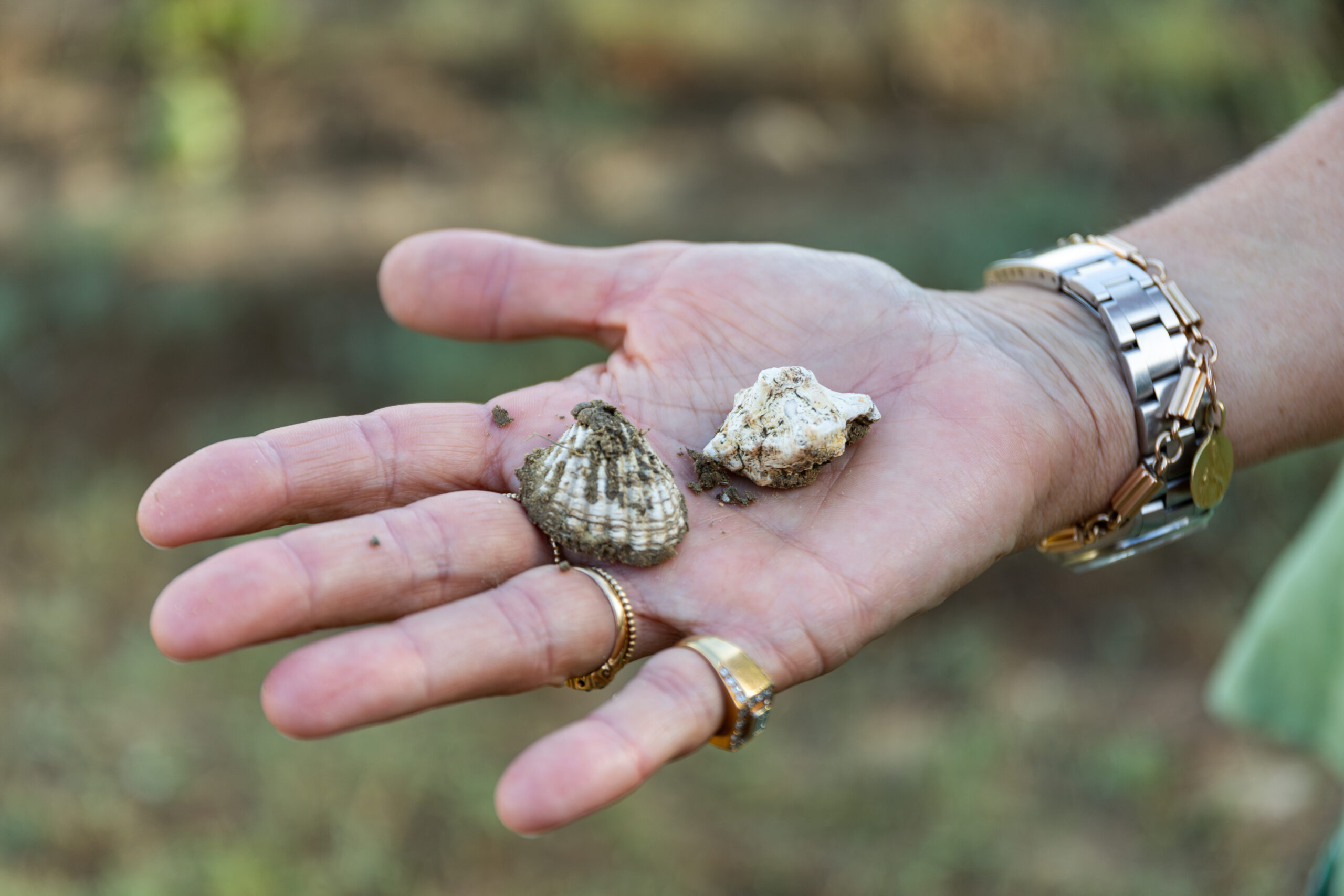
One of the most fascinating aspects of these soils is the widespread presence of marine mollusc fossils, such as scallops and oysters. These are shell fragments that accumulated in the sediments millions of years ago.
These calcareous elements have an interesting effect on the structure of the terrain. They break up the compactness of the clay, slightly improve drainage and contribute mineral components that can be reflected in the wine’s profile.
When certain plots of the estate are observed after soil cultivation, it is not uncommon to find traces of these fossil shells — witnesses to a marine past that today translates into character in the glass.
The “Vinci Formation”: A Unique Terroir
From a geological perspective, the alternation of grey clays and fossil sands is known as the Vinci Formation. It is a sedimentary system typical of these hills, where layers of different materials alternate following the natural slope of the landscape.
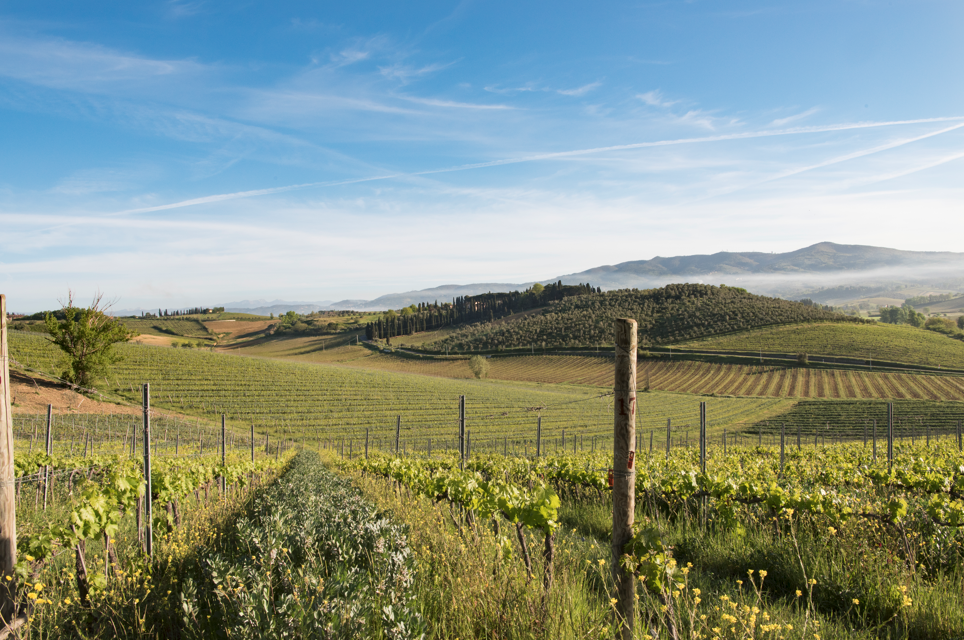
This mosaic of soils creates very different conditions even within a few hundred metres.
Some areas are more compact and clay-rich, others more free-draining and sandy. For those who cultivate vines, this means having access to plots with distinctly different agronomic behaviours.
It is one of the most interesting aspects of vineyard management: every small variation in the terrain can produce different nuances in the wine.
The More Clayey Zones
The areas where clay dominates tend to be found on the mid-slopes and lower points of the hills, where the finer sediments have accumulated over time.
Here the soil retains more water and maintains a certain freshness even during the summer months.
Under these conditions the vine grows more steadily and produces grapes with a more solid structure. It is a context particularly suited to varieties that benefit from a constant water supply, such as Merlot, or to selections of Sangiovese that aim for depth and the ability to evolve over time.
Wines from these plots tend to have greater body, more pronounced tannins and a structure suited to ageing.
The Sandier Zones
Moving uphill towards the higher parts of the ridges, the soil composition changes. On the crests and hilltops, Yellow Sands prevail — lighter, more free-draining marine sediments.
These soils warm up more quickly and allow water to flow through with greater ease. The vine’s roots encounter less resistance and vegetative growth is more balanced.
In these plots the wines tend to develop greater aromatic finesse and a more elegant tannic texture.
Sangiovese, in particular, expresses a more slender and fragrant profile here. Certain white varieties also find ideal conditions to develop a very recognisable mineral sapidity.
A Balance Between Power and Finesse
The combination of deep clays and fossil sands is one of the distinctive elements of the Vinci territory.
The more compact soils favour structure and longevity, while the sandier ones bring elegance and aromatic precision. Together they create a balance that is found in the wines of the area.
It is no coincidence that terroirs with similar characteristics have given rise to some of the most important wine-growing areas in Europe.
In Bordeaux, on the Right Bank, the calcareous clays of Pomerol support deep, long-lived wines. In Chablis and Sancerre, fossil-rich marls underpin the minerality of the great Loire whites. In Rioja and Ribera del Duero, calcareous clays contribute to the structure of Tempranillo.
Naturally every territory has its own identity, but these comparisons help to understand just how much the soil can influence the character of a wine.
The Role of Soil in Dianella’s Wine
In the end, the work in the vineyard and the cellar is always a dialogue with the earth.
The clay forces the vine to push its roots deep. The fossil sands improve drainage. The marine residues bring mineral elements that contribute to complexity.
These are factors that cannot be seen directly, but that emerge over time in the glass: in the freshness, in the structure, in the savoury sensation that often accompanies wines produced on ancient seabeds.
It is the proof that wine is not born from the grape alone, but also from the place where that vine sinks its roots.