June at Villa Dianella is the month when the tomato starts to get serious. In the estate’s kitchen garden the first red clusters ripen under the Tuscan sun, the basil is at the height of its fragrance and the warm air carries that promise of summer which changes the rhythm of the days and of the kitchen.
At the Bistrot delle Scuderie, the June recipe is a dish that takes three simple ingredients and transforms them into something memorable: chitarra spaghetti with roasted tomato sauce, burrata and basil. It is a dish that tells the story of summer before summer has truly begun.
The secret lies in the roasted tomato. Not raw, not pan-fried, but slowly roasted in the oven until it concentrates, caramelises gently and develops a depth of sweetness that fresh tomato alone cannot deliver. On top, the burrata opens with its soft cream that mingles with the hot pasta. The basil closes everything with its clean, unmistakable fragrance.
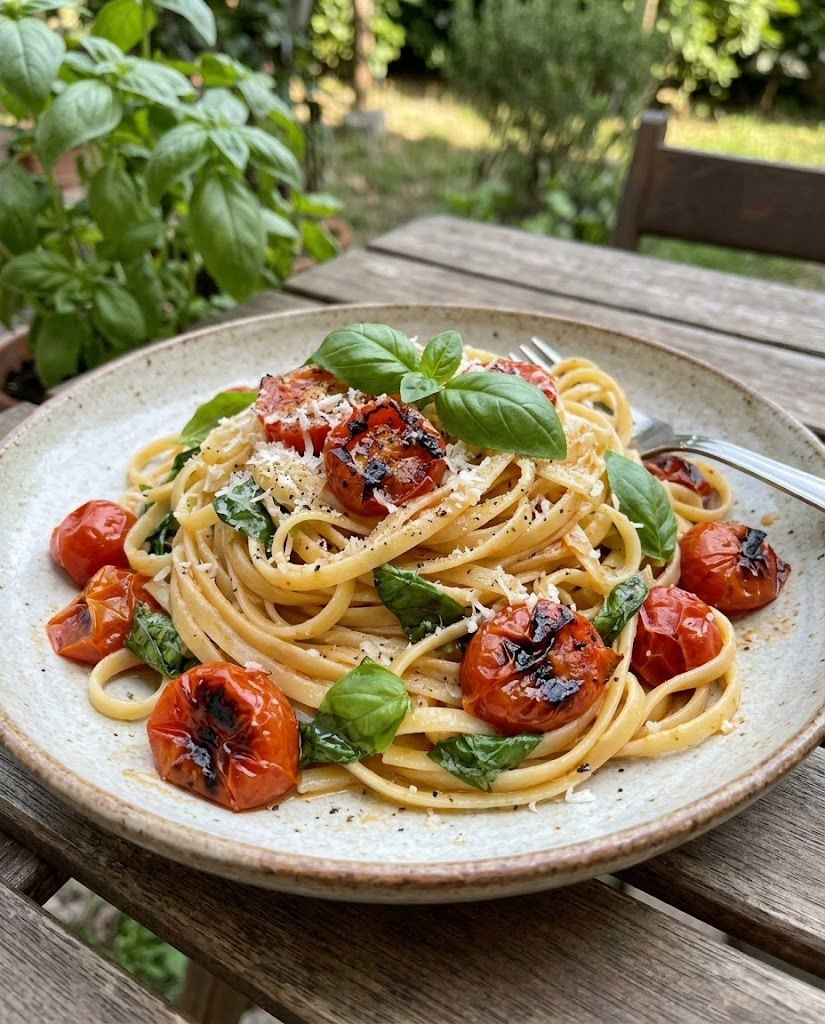
Three ingredients. No complication. All of Tuscany on a plate.
The Roasted Tomato: The Difference the Oven Makes
The decision to roast the tomato rather than use it raw or toss it in a pan is what makes this dish different from any ordinary summer tomato pasta.
When the tomato is halved, dressed with oil, salt and a thread of sugar and placed in the oven at a moderate temperature for a long time, something important happens. The water evaporates slowly, the flesh concentrates and the fruit’s natural sugars begin to caramelise. The result is a tomato with an intense, almost smoky sweetness, its edges slightly darkened and its heart still soft and juicy.
It is a flavour that sits halfway between fresh tomato and sun-dried tomato. It has the freshness of the first and the depth of the second, without being either. It is something entirely different.
For this dish, ripe, flavourful tomatoes are used. Datterini are the ideal choice because they have a perfect ratio of flesh to water for roasting: meaty enough not to collapse entirely, sweet enough to caramelise well. Cherry tomatoes or piccadilly also work very nicely.
The oven time is long — at least forty minutes, ideally an hour — but requires no attention. You put them in and forget them. When they come out, the aroma that fills the kitchen is already the promise of the dish to come.
The Burrata: Creaminess That Needs No Cooking
The burrata is the perfect counterpoint to the roasted tomato. Where the tomato is concentrated, hot and lightly caramelised, the burrata is cool, soft and milky.
It is not cooked. It is not warmed. It is placed on the hot pasta at the moment of serving and the heat of the spaghetti does the rest. The outer shell of the burrata — pulled mozzarella — softens slightly. The heart, made of stracciatella — that cream of mozzarella threads and fresh cream — opens and blends with the tomato sauce, creating a natural cream that envelops every strand of pasta.
The temperature contrast is essential. The pasta and tomato are hot. The burrata is cold, just taken from the refrigerator. When they meet on the plate, the thermal difference creates a sensation in the mouth that is an essential part of the dish: hot and cold, concentrated and fresh, sweet and lactic.
The quality of the burrata is decisive. It must be absolutely fresh, with a heart that is still liquid and creamy. A mediocre burrata ruins the dish. An excellent one transforms it.
Chitarra Spaghetti: Why This Shape
Chitarra spaghetti is a pasta format with a square cross-section rather than a round one. It is traditionally cut using an instrument called a chitarra — a wooden frame with taut metal wires like guitar strings — which cuts the sheet into strands with a rectangular profile.
This seemingly small difference changes a great deal in how the dish performs. The square section creates more surface contact with the dressing and more resistance under the tooth. Chitarra spaghetti have a more rustic, fuller texture than classic spaghetti, a more decisive bite that pairs well with the richness of the roasted tomato and the creaminess of the burrata.
It is also a shape that holds sauce better in its corners and irregularities. Every forkful carries more dressing, more flavour, a better balance between the components.
If chitarra spaghetti cannot be found, a good substitute is tonnarelli or a quality spaghettone. The important thing is to avoid shapes that are too thin, which would be lost beneath the richness of the dressing.
The Recipe: Chitarra Spaghetti with Roasted Tomato Sauce, Burrata and Basil
Ingredients for 4 people
- Good-quality durum wheat chitarra spaghetti: 400 grams
- Ripe datterini tomatoes: 600 grams
- Fresh quality burrata: 2, approximately 125 grams each
- Fresh garden basil: a generous bunch
- Garlic: 2 whole cloves, peeled
- Villa Dianella extra virgin olive oil: 6 tablespoons, of which 4 for roasting and 2 to finish
- Caster sugar: a scant teaspoon
- Maldon salt or flaky sea salt: for the tomatoes
- Fine salt: for the pasta water and to adjust
- Freshly ground black pepper
- Dried chilli flakes: a pinch, optional
Method
Preheat the oven to 180 degrees.
Wash the datterini and cut them in half lengthways. Arrange them on a baking tray lined with parchment paper, cut side up, well spaced. Dress with four tablespoons of extra virgin olive oil, the scant teaspoon of sugar, a generous pinch of flaky salt and the two whole garlic cloves tucked between the tomatoes. Add a few whole basil leaves directly onto the tray.
Roast for forty minutes to an hour, checking halfway through. The tomatoes are ready when the edges are slightly darkened and caramelised, the flesh has concentrated and the base of the tray holds a thick, fragrant juice. They must not burn: if they darken too quickly, lower the temperature to 160 degrees.
Remove from the oven and discard the garlic cloves. With a fork, lightly crush the tomatoes on the tray, mixing them with their cooking juices. The aim is not a smooth cream but a rustic sauce with visible pieces of tomato. Adjust the salt if needed and set aside.
Bring plenty of salted water to the boil and cook the chitarra spaghetti for one minute less than the time indicated on the packet.
Drain the spaghetti, reserving a generous ladleful of cooking water, and tip them directly onto the tray with the roasted tomatoes. Toss everything over medium heat for one minute, adding cooking water until you achieve a consistency that coats the pasta without being too dry or too wet.
Divide the pasta among the plates. On each plate, open half a burrata, placing it at the centre of the pasta. Add fresh basil torn by hand at the last moment, a generous drizzle of raw extra virgin olive oil, a grinding of black pepper and, for those who wish, a pinch of crumbled dried chilli.
Serve immediately, before the burrata warms too much. The beauty of the dish lies in mixing the burrata into the pasta at the table, letting the stracciatella open and blend with the roasted tomatoes to create that irregular, pink cream that is the heart of the experience.
How to Eat It: The Ritual of Mixing
This is a dish with its own small ritual. You do not mix everything in the kitchen before serving. It is brought to the table with the whole burrata resting on the pasta, and each person opens it with their fork and mixes it as they prefer.
Some break it open immediately and distribute it across the entire plate. Others open it just slightly and take a little at a time, alternating forkfuls of pure roasted tomato with forkfuls rich in stracciatella. There is no right way. The dish works in both cases, and the freedom to choose is part of the pleasure.
Pairing with Villa Dianella Wines
The richness of the roasted tomato and the creaminess of the burrata call for a wine that can cut through these textures without getting lost.
The rosé All’Aria Aperta is the most natural pairing for a June evening. Its lightness and freshness cut through the burrata’s creaminess, while its delicate fruity note engages with the sweetness of the caramelised tomato. It is a wine that refreshes without dominating — exactly what is needed.
Sereno e Nuvole, Vermentino IGT Dianella, works equally well, especially for an outdoor lunch. Its mineral sapidity and clean acidity cleanse the palate after every mouthful rich in stracciatella and concentrated tomato.
For those who prefer red, a young Chianti Dianella served slightly cool is a choice that surprises. The Sangiovese’s acidity meets the roasted tomato’s acidity naturally, and its light tannins find an ally in the burrata’s richness.
June at the Bistrot: When Simplicity Becomes Luxury
This dish tells a truth about Tuscan cooking that is worth repeating: the best dishes are those with the fewest ingredients and the most attention.
Three components. Tomato, burrata, basil. But the tomato is slowly roasted until it becomes something new. The burrata is chosen absolutely fresh and of the highest quality. The basil is torn by hand at the very last second, still carrying the fragrance of the garden.
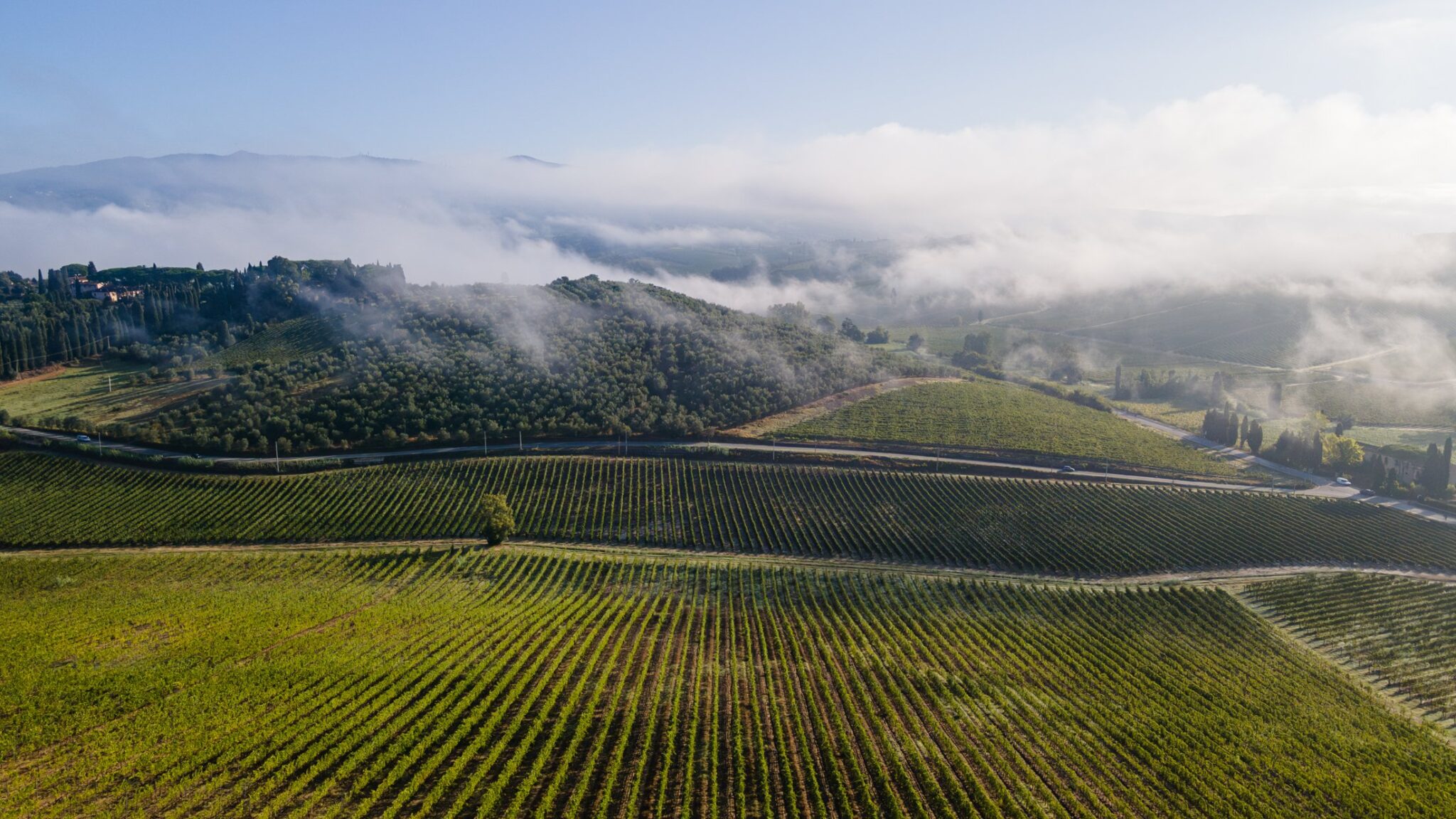
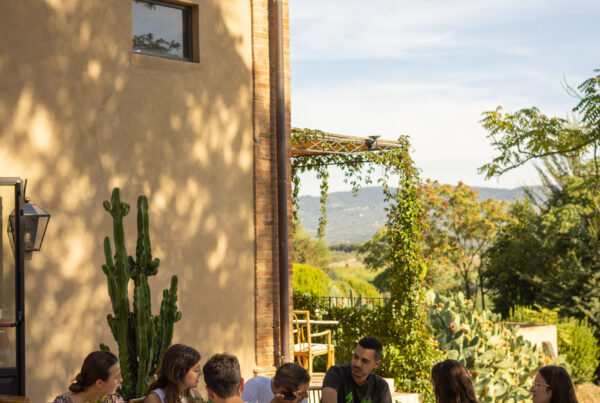
At the Bistrot delle Scuderie this dish arrives at the table with the terrace open to the vineyards and the first long evenings of June. At home it can become the perfect supper for a summer evening with friends: roast the tomatoes in the oven, cook the pasta and serve. Nothing more.
The only rule is to respect the ingredients. The roasted tomato needs time, not tricks. The burrata needs to be utterly fresh, not worked. The basil needs to be added at the very last second, not cooked.
June in Tuscany is this: ingredients that speak for themselves and a kitchen with the good sense not to get in the way.