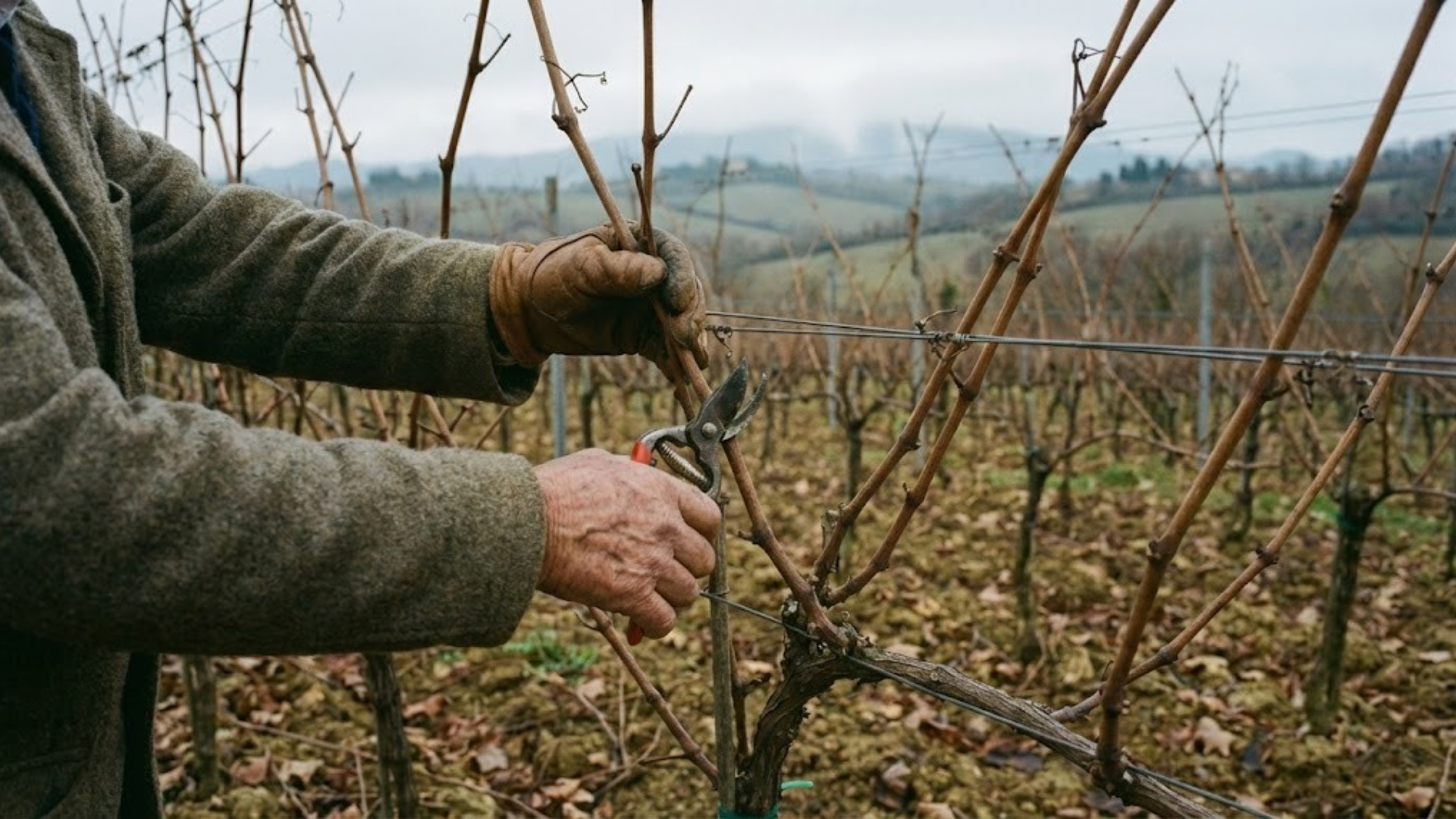
Winter in the vineyard may seem quiet, but only on the surface. When the leaves have fallen and the vine enters its vegetative rest, one of the most important phases of the year begins: pruning.
This year, however, the work was accompanied by a particularly cold winter, with low temperatures and prolonged frosts, requiring care, proper timing, and some precise choices.
A colder-than-average winter
Low temperatures are not necessarily a problem for the vine. In fact, a cold and dry winter can be a valuable ally. Intense cold helps to:
reduce the pressure of pests and pathogens
slow vegetative activity in a natural way
promote a deep, complete rest of the plant
In seasons like this, the vineyard truly “sleeps.” And it is precisely this full rest that allows the vine to restart more evenly in spring.
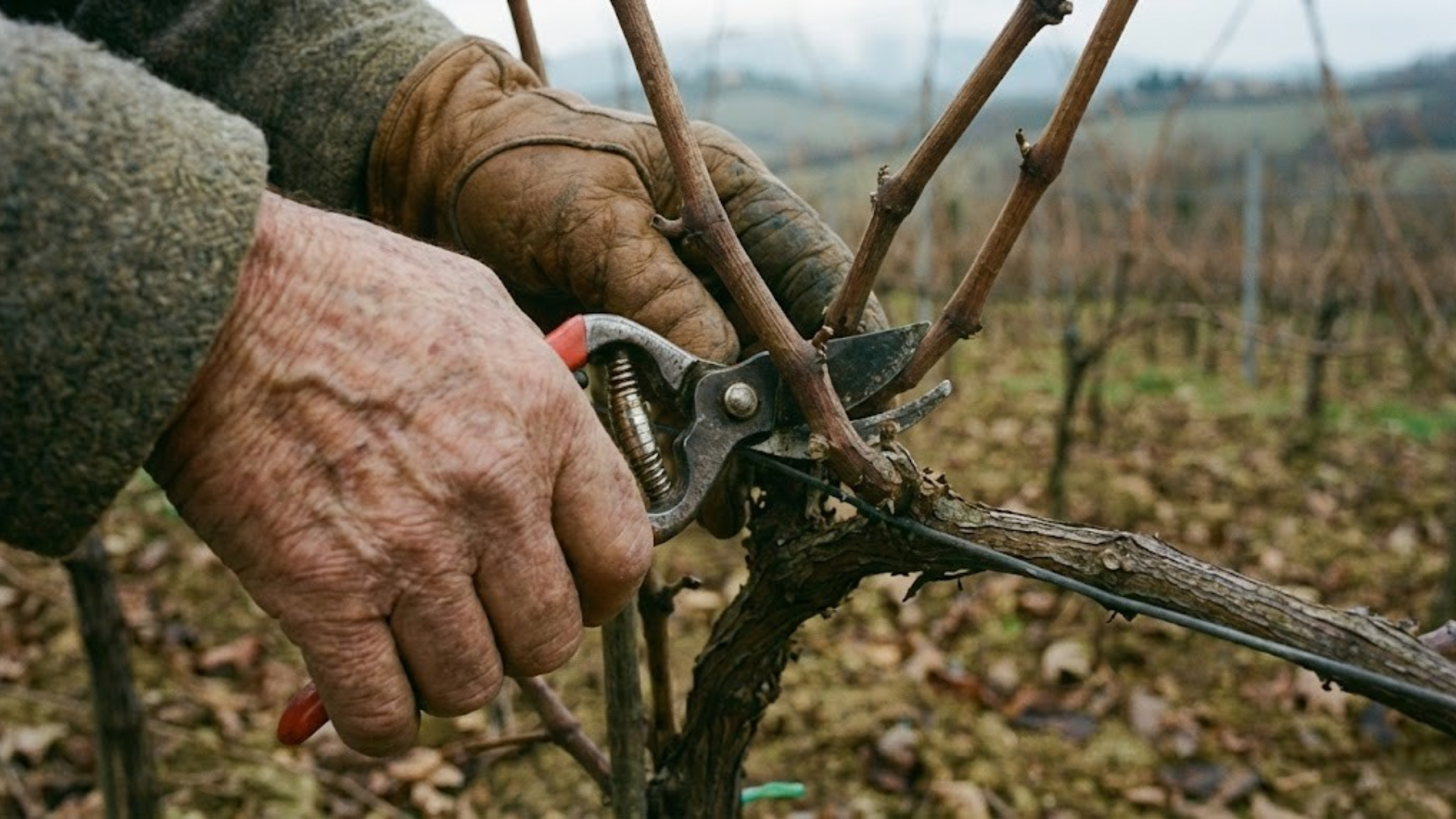
Pruning: a matter of balance
Winter pruning is never a mechanical operation. Each vine is observed individually. We assess:
how it responded in the previous season
its vigor
the distribution of the canes
the balance between production and structure
With a very cold winter, pruning requires even greater attention. Working too early, while strong frosts are still ongoing, can expose the cuts to unnecessary stress.
For this reason, the work is planned by parcels, respecting the timing of the season and adapting to weather conditions.
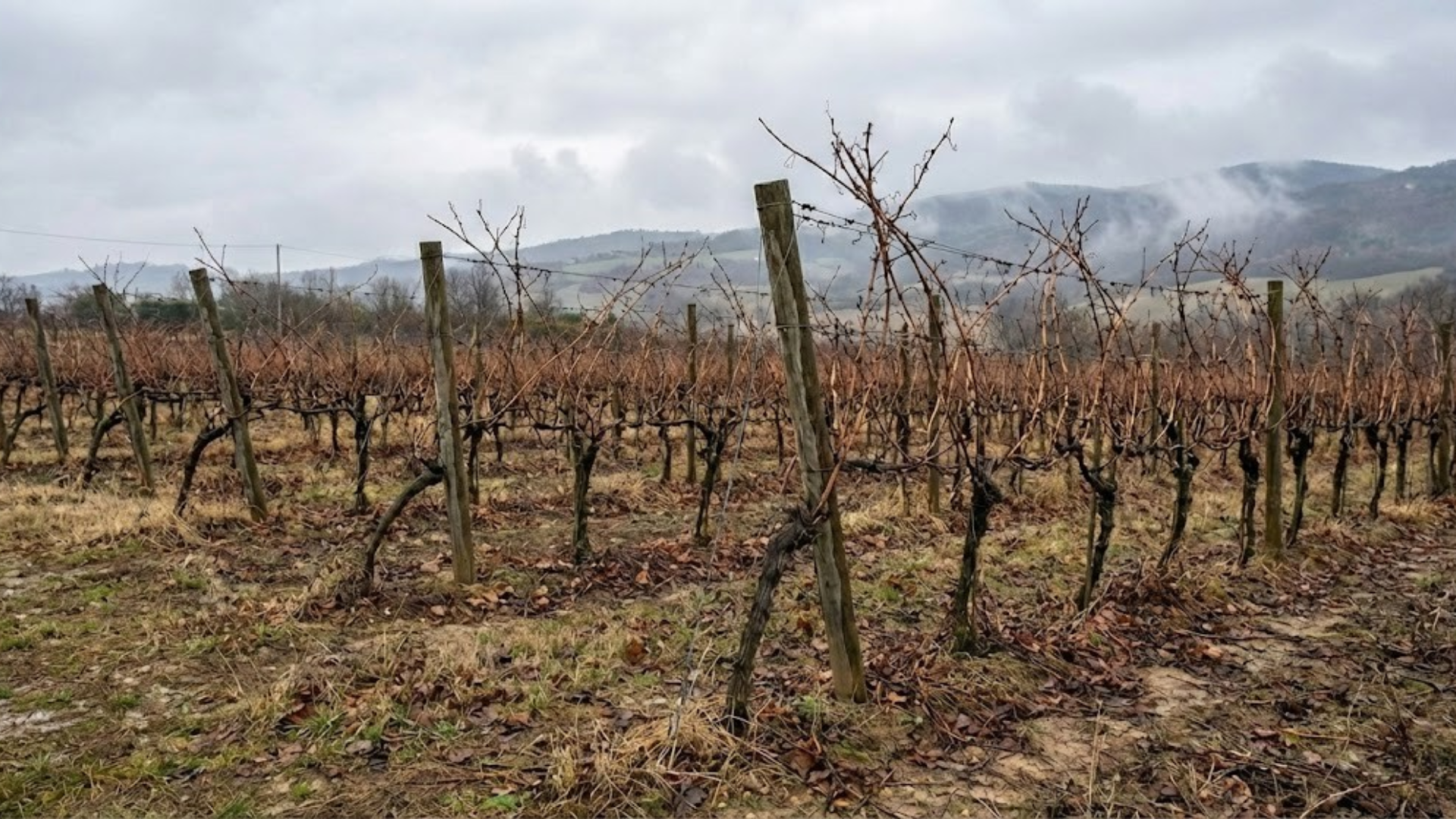
Why cold is not something to fear
Contrary to what one might think, winter cold is not an enemy of quality wine. On the contrary, in well-managed vineyards it:
strengthens the vine
naturally selects the strongest shoots
contributes to a more even restart
The real risk is not the cold itself, but sudden temperature swings. When winter is stable, even if harsh, the vine knows how to protect itself.
Preparing the vineyard for the new season
Pruning is also the moment when part of the future harvest is decided. With every cut, we define:
how much fruit the vine will produce
how the plant’s energy will be distributed
what kind of balance to seek for the following season
In an agricultural reality like Villa Dianella, pruning does not follow a logic of maximum yield.
The goal remains the same: quality, consistency, and respect for the vine.
The invisible work that makes the difference
Those who visit the vineyard in winter see bare rows, damp soil, and cold hands at work.
But it is precisely in these months that the character of the wines to come is built.
Pruning is an ancient gesture, repeated every year, requiring experience, patience, and a deep knowledge of the vineyard.
Cold, silence, and the slow pace of winter are all part of this work.
And when spring arrives, the vineyard will be ready to start again, on solid foundations.