When you talk about Tuscan desserts, you immediately think of castagnaccio, cantucci, panforte.
But there’s a cake that, in Florence and the surrounding area, carries an almost identity-defining value: Schiacciata Fiorentina.
It’s not an elaborate cake.
It’s not a dessert from a Michelin-starred restaurant.
It’s a simple, soft cake, fragrant with citrus, born for Carnival but now part of collective memory.
And as often happens in Tuscany, behind a seemingly “humble” cake lies a precise agricultural history.
Why Is It Called “Schiacciata”?
It has nothing to do with the savoury schiacciata flatbread.
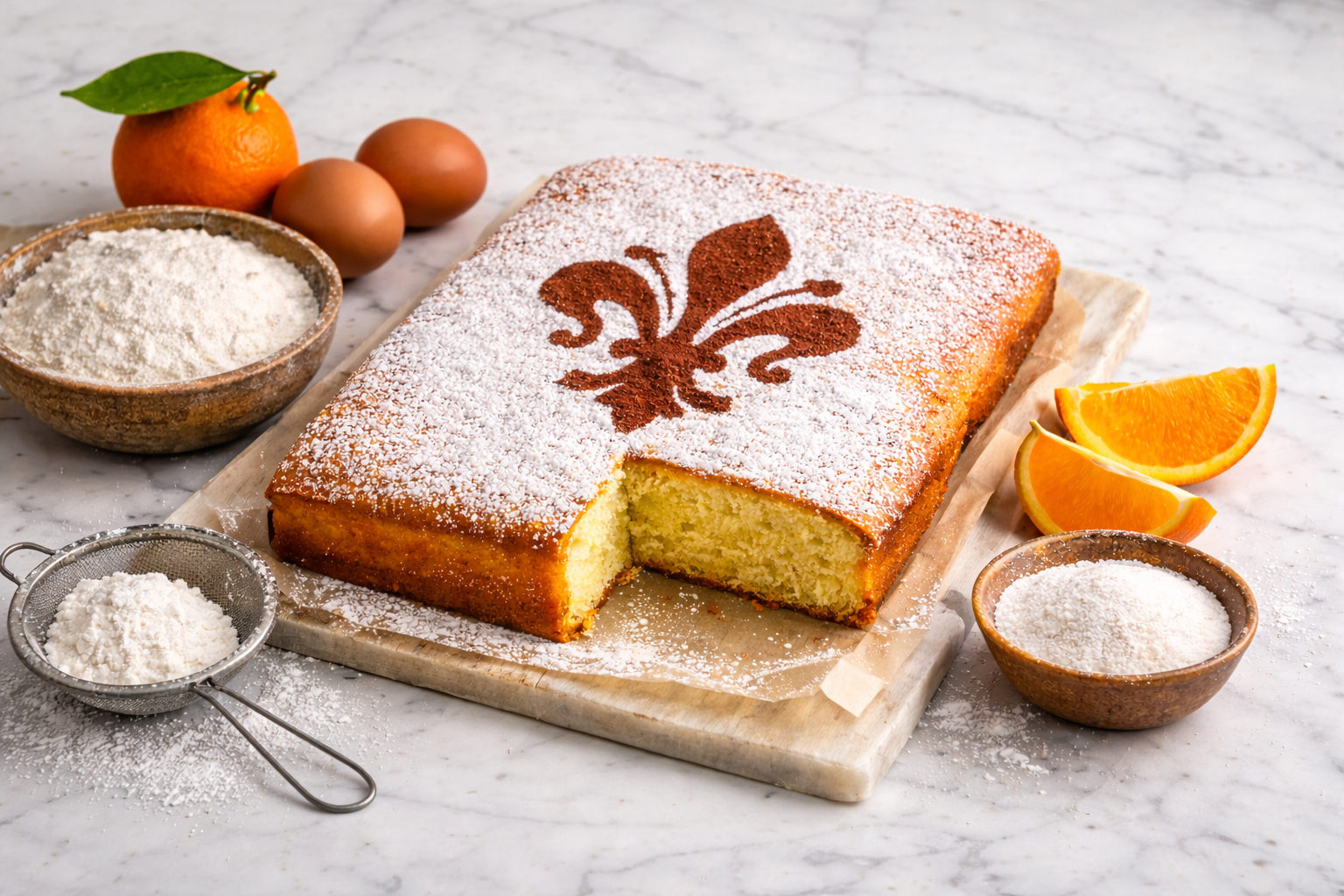
The name comes from its low, rectangular shape.
It used to be baked in the wide trays of wood-fired ovens, with a dough closer to a sweet bread than a modern cake.
It had no filling, no cream.
It was a cake from the neighbourhood bakery.
Today it’s softer, taller, often filled with cream, but the traditional version remains the most interesting: simple, citrusy, without excess.
A Cake Tied to the Seasons
Schiacciata Fiorentina originated during Carnival.
And that’s no coincidence.
Carnival was the time before Lent, when richer ingredients were used: eggs, sugar, lard or butter.
In the countryside, this meant using whatever was on hand:
- flour
- fresh eggs
- sugar
- orange zest
- milk
Simple ingredients, but brought together at the right moment.
The Features of a True Schiacciata Fiorentina
The authentic version has a few precise characteristics:
- rectangular shape
- moderate height
- intense orange scent
- surface dusted with icing sugar
- soft but not spongy texture
It shouldn’t be too sweet.
It shouldn’t be heavy.
It’s a cake for an afternoon snack, the end of lunch, or breakfast the next day.
The Traditional Recipe
Here’s a version faithful to Florentine tradition.
Ingredients (for a 30x20cm tray)
- 300g plain (00) flour
- 150g sugar
- 3 eggs
- 80ml seed oil (or 100g melted butter for a richer version)
- 120ml milk
- grated zest of 1 unwaxed orange
- 1 sachet baking powder
- 1 pinch of salt
- icing sugar to finish
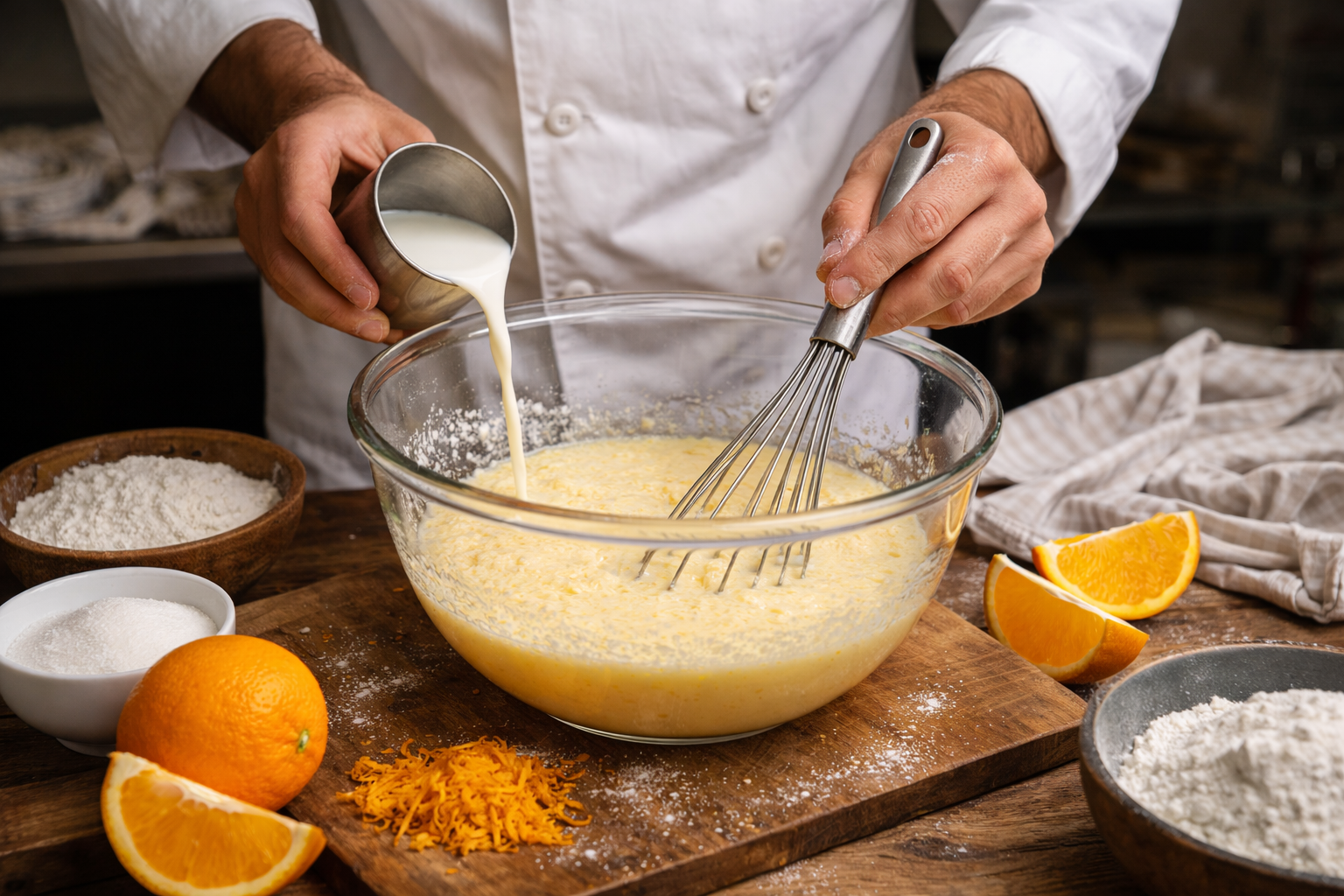
Method
- Whisk the eggs with the sugar until light and foamy.
- Add the oil (or melted butter) in a thin stream.
- Fold in the milk and orange zest.
- Add the sifted flour, baking powder and salt.
- Pour into a tray lined with baking paper.
- Bake at 170°C for about 25–30 minutes.
It should stay soft but not damp.
Once cool, it’s dusted with icing sugar.
Tradition has it that a stencil of the Florentine lily is placed on top.
Modern Versions: Yes or No?
Today you can find versions filled with:
- chantilly cream
- chocolate cream
- whipped cream
These are legitimate variations, but the original recipe had no filling.
The beauty of Schiacciata Fiorentina lies in its simplicity.
Why This Cake Still Makes Sense Today
In an age of elaborate desserts, Schiacciata Fiorentina is a reminder that:
- a cake can be simple
- seasonality matters
- local identity shouldn’t be lost
It’s a cake not made to impress.
It’s made to be shared.
It’s cut into squares.
It’s brought to the table without ceremony.
A Cake That Speaks of Florence (and Beyond)
Even though the name is Florentine, Schiacciata is found throughout the area between Florence, Empoli and Vinci.
It’s part of that food culture that unites city and countryside.
It’s not an aristocratic cake.
It’s a cake of the people.
And that’s exactly why it has endured.