In recent years there’s been a lot of talk about innovation in viticulture. New rootstocks, new planting densities, mechanisation, technology. All true.
But sometimes innovating also means going backwards.
At Villa Dianella we are reintroducing a historic training system: the Tuscan capovolto. Not out of nostalgia, but for a concrete reason tied to grape quality and the balance of the vine.
What Is the Capovolto System?
The capovolto is a traditional system widespread in Tuscany until the 1960s–70s, before vineyards became heavily mechanised.
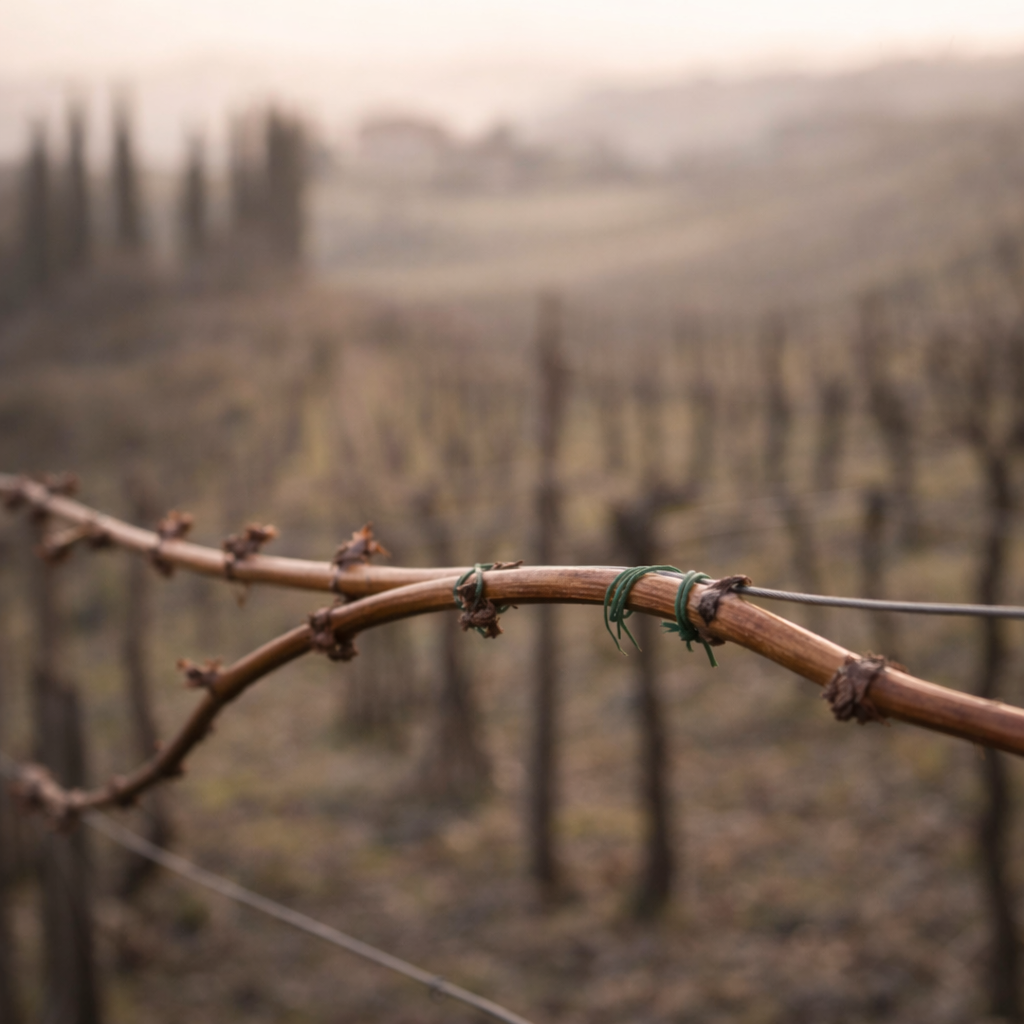
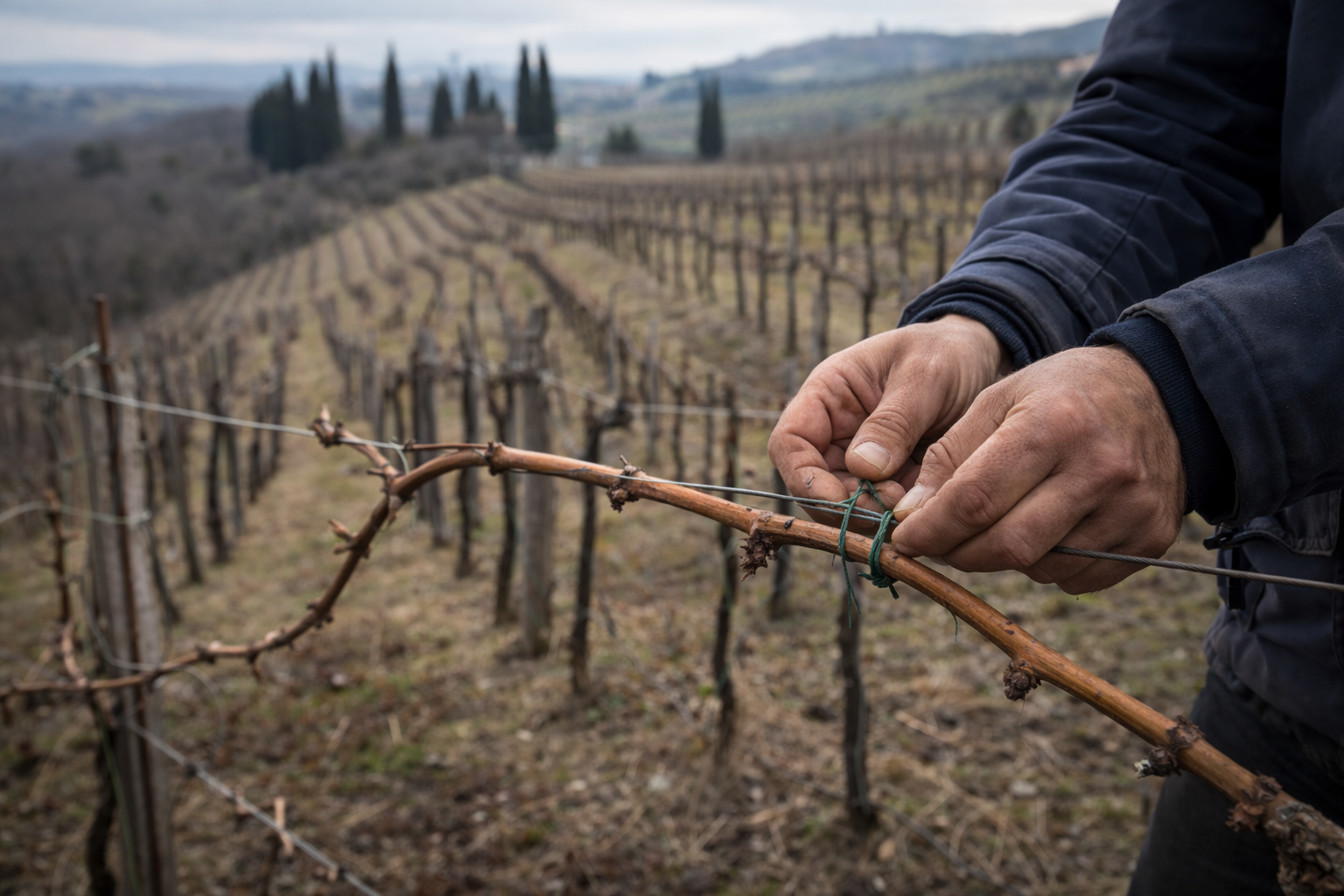
The vine is pruned leaving a long cane, which is bent downward and tied to the wire. This creates a more even distribution of sap and shoots.
In practice, it’s not the vine that “climbs”, but the cane that is bent.
It’s a system that requires:
- more manual labour
- greater care during pruning
- a constant presence in the vineyard
It’s not the simplest system. But it is one of the most balanced.
Why Go Back to the Capovolto Today?
It’s a fair question: why take up a more demanding system when faster solutions exist?
For three main reasons.
- Natural Management of Vine Vigour
In vintages like the last few — with cold springs followed by suddenly hot summers — managing vigour becomes central.
The capovolto allows for a more even distribution of shoots and production that’s less concentrated in a few spots.
This means:
- more airy bunches
- lower risk of compaction
- better phenolic ripening
It’s not a magic formula. It’s a matter of vegetative balance.
- Better Grape Quality
A less stressed vine produces more consistent grapes.
The capovolto makes it possible to:
- better modulate the production load
- avoid excesses
- encourage a more gradual ripening
In areas like Vinci, where the climate can swing rapidly, this detail makes the difference.
- Consistency with Organic Viticulture
Dianella farms organically.
The capovolto also helps manage plant health, because it improves ventilation and sun exposure.
Less stagnant humidity means:
- lower pressure from fungal diseases
- more targeted interventions
- greater natural control
It doesn’t eliminate problems. It makes them more manageable.
Is This a Return to the Past?
No. It’s a technical choice.
We’re not bringing back the capovolto everywhere.
We’re introducing it in selected plots, where we believe it can better express the potential of Sangiovese and some native varieties.
Viticulture isn’t made of dogmas. It’s made of observation.
If a historic solution still works, there’s no reason to discard it.
Time as a Deciding Factor
The capovolto requires more time spent pruning.
Every vine needs careful attention. It isn’t standardised work.
This means:
- more time spent in the vineyard
- less automatism
- deeper knowledge of every single vine
On a farm like Dianella, this approach is consistent with our idea of quality: less quantity, more attention.
What Changes in the Wine?
The most honest answer is: we’ll see over time.
Early impressions point to:
- finer tannins
- more balanced acidity
- more even ripening
But wine isn’t judged by words. It’s judged in the bottle, after years.
The capovolto is a medium-term investment, not a marketing choice.